Perez warns F1 rules are becoming dangerous
"I’m afraid something bad will happen soon"
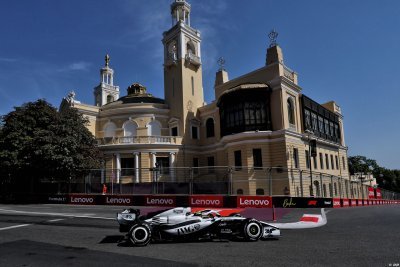
Sergio Perez has re-joined the ongoing criticism of Formula 1’s new-generation regulations, warning that extreme speed differences caused by energy management are now becoming a real safety concern.
The Cadillac driver told Sport1 that he narrowly avoided a major accident while defending from Liam Lawson in Baku.
"Above all, we need to closely monitor what happens with energy management and the differences between the engines during the race," said the Mexican.
"When I was defending against Lawson, I almost collided with him heavily because of the differences in energy supply and engine power."
"That’s too dangerous. I’m afraid something bad will happen soon if we don’t change the rules."
The problem has been one of the central complaints about the 2026 regulations, with drivers forced into aggressive energy saving and deployment strategies that can create major closing-speed differences.
Ferrari-powered Perez believes the disparity between power units is making that worse.
"At the moment, Mercedes and Red Bull have a very strong engine," said the 36-year-old.
"They can overtake you in places where our energy supply is so much worse and different. The speed difference is too dangerous."
The FIA already adjusted the rules earlier this season in an attempt to reduce the most extreme lift-and-coast behaviour, while further changes are planned for 2027, including a reduced electrical contribution.
But Perez remains unconvinced.
When asked whether the current cars could spoil Sepang’s high-speed layout this weekend, he smiled: "We’d better not talk about it."
Former F1 driver Vitaly Petrov has also criticised the way the cars behaved on Baku’s long straights.
"It’s funny, but we never saw on-board cameras showing the entire run along Neftchilar Avenue during the TV broadcast," the Russian noted in his Championat column.
"Apparently, the organisers really didn’t want to broadcast a situation where, at some point, the cars’ speed not only stops increasing but begins to drop, and some drivers even downshift before the braking zone!"