Marko says 2026 rules have killed qualifying appeal
"I didn’t expect it to have such a significant impact"
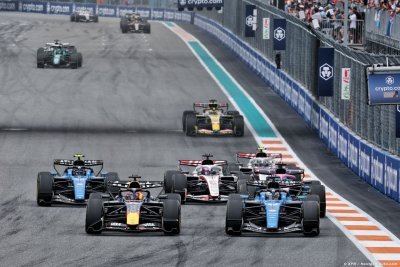
Former Red Bull advisor Dr Helmut Marko says Formula 1 qualifying has lost its essence under the controversial 2026 regulations.
The 83-year-old Austrian remains one of the loudest critics of the new hybrid era despite the FIA already introducing emergency tweaks after only a handful of races.
"It was clear that a lot would change with the transition to these engine regulations," Marko told motorsport-magazin.com.
"But to be honest, I didn’t expect it to have such a significant impact on qualifying. Qualifying has lost its appeal."
Marko believes the shift away from flat-out attacking towards energy preservation has fundamentally changed the character of Formula 1 driving.
"If previously it was important to brake as late as possible and hit the gas earlier when accelerating, and at the same time drive at the limits of the equipment’s capabilities," he said, "now the main thing is to control energy consumption."
"And Formula E is there for that."
He added that racing itself has only remained entertaining because of certain technical quirks under the current regulations. "The races are going well thanks to Ferrari having an advantage at the start," Marko said.
"But overtaking isn’t what we’re used to."
Still, Marko welcomed the FIA’s recent willingness to begin walking back some of the most extreme aspects of the regulations. "If we gradually reduce the share of electric power and gradually increase the power of the internal combustion engine, we can eventually achieve a more or less normal picture," he said.
Marko also argued the original philosophy behind the regulations has already become outdated.
"These regulations were originally designed to attract Porsche and Audi to the championship," he explained.
"Then Cadillac also decided to develop its own power unit for Formula 1. But now the internal combustion engine is making a comeback, and this is justified by the transition to carbon-neutral fuels."
Formula 1 already introduced its first mid-season changes before Miami after drivers complained about excessive energy harvesting, lift-and-coast racing and dangerous closing-speed differences.
"The first changes were made before the Miami Grand Prix, which resulted in some improvements, albeit minor ones."
"Work in this direction will continue, though it is a challenging task, inevitably requiring compromises," said Marko.
Despite his criticism of Formula 1’s electrical direction, Marko insisted he is not anti-electric vehicle.
"I drive a Mini E myself," he revealed.
"But I have to admit, the range on a single charge drops sharply in winter. In urban conditions, an electric car like this has a number of advantages, especially since there are plenty of charging stations in the city."
"I try to keep up with the times," Marko added. "But I wouldn’t drive one of these cars in the countryside."