FIA plans 2026 rules ’tweaks’, Marko sceptical
"There was a commitment to making tweaks"
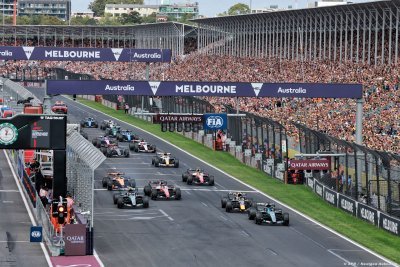
Formula 1’s first April crisis talks over the controversial 2026 regulations have concluded with the FIA promising only "tweaks" for now - but a broader push for change is clearly building.
"The first of a series of meetings to discuss potential changes to the 2026 Formula 1 regulations was convened today by the FIA," an FIA statement read.
"Today’s meeting, between the FIA and technical experts from the Teams and Power Unit Manufacturers, covered a raft of topics as part of the natural evolution of the 2026 F1 technical and sporting regulations.
"It was generally agreed that although the events to date have provided exciting racing, there was a commitment to making tweaks to some aspects of the regulations in the area of energy management. There was constructive dialogue on difficult topics especially when considering the competitive nature of the stakeholders.
"It was agreed earlier in the year by all parties that this sequence of meetings would take place following the first three races of the 2026 Formula 1 season. The scheduling was timed so that sufficient technical data could be gathered in advance of any discussions.
"As part of the round of collaborative discussions, further meetings are planned over the coming fortnight. There is a Sporting Regulations meeting on April 15 during which any changes in Section B that are required to facilitate the technical changes will be discussed.
"The next technical session will be on April 16 during which points discussed today will be followed up and new topics will be given exposure.
"A high-level meeting with representation from all stakeholders is scheduled for April 20 where it is anticipated that preferred options jointly proposed by the technical teams will be considered and a consensus sought on the way forward.
"The 2026 regulations were developed and agreed in close partnership with teams, OEMs, Power Unit Manufacturers, the commercial rights holder and the FIA all at the table. It is in this spirit of collaboration that potential changes are being discussed.
"Any changes to the regulations will be subject to the FIA WMSC approval process."
Further meetings are already scheduled, including technical sessions on April 15 and 16, before a decisive high-level gathering on April 20 where "preferred options" will be discussed.
At the heart of the issue is the heavy focus on energy management - particularly in qualifying, where drivers have been forced to lift on straights or through fast corners rather than deliver flat-out laps.
Former Red Bull advisor Dr Helmut Marko says that shift has fundamentally altered the sport - and led to Max Verstappen hinting at a sabbatical or full F1 exit.
"Max is a thoroughbred racer," he told motorsport-magazin.com. "The current regulations are extremely focused on energy management - this only works in conjunction with the software engineers. The driver has been deprived of his dominant role."
While some adjustments now appear inevitable, Marko is not convinced they will go far enough.
"There will be adaptations, but whether it will be possible to ensure that the driver is the decisive factor again, I cannot currently assess," he added.
Others believe meaningful changes are both possible and relatively straightforward.
Former prominent F1 engineer Toni Cuquerella told Marca that the solution may lie in rebalancing the hybrid system rather than redesigning it entirely.
"With minimal changes, you can have a huge impact on how the race is run, how qualifying is done," he said.
"We currently have 350kW, but that only lasts us halfway down the straight. We can reduce the electric motor’s power output so it lasts the entire straight."
Former F1 driver Jean-Eric Vergne, speaking to AS newspaper, suggested part of the backlash may stem from confusion around the concept itself.
"Perhaps F1 hasn’t properly explained why they wanted to go 50 percent electric and the changes that would bring," said the Frenchman and now Formula E driver.